

Feng Shui at Russian Nails
- Lina Ahlia
- Apr 29, 2025
- 3 min read
Updated: Apr 15
Feng Shui in Business Spaces:
How Energy Shapes Success
How Russian Nails applied ancient principles of balance to create a space where people genuinely feel at ease.
There is something that happens in a well-designed space that goes beyond aesthetics. You feel it before you can name it: a settling, a sense of being held, an ease that makes you want to slow down rather than rush through. It is not accidental. And in industries rooted in wellness and care, understanding how physical environments shape our inner experience is not a peripheral concern. It is a foundational one.
This is where Feng Shui, the ancient Chinese practice of spatial arrangement, offers something genuinely useful. Meaning "wind" and "water," Feng Shui is built around the idea that energy moves through space, and that how a space is arranged either supports or disrupts that flow. When applied with care, it creates environments that feel harmonious at a level people sense immediately, even before they can explain why.
Why Space Shapes Experience
The environments we inhabit are not neutral. Research in environmental psychology has long documented how lighting, color, scent, sound, and spatial arrangement affect mood, stress levels, and how safe we feel in a given place. Feng Shui encodes this understanding in a practical system. Its concern is not only beauty but alignment: creating spaces where the energy supports the people who move through them, both those who work there and those who come to receive care.
For a wellness or beauty business, this matters in a particular way. Clients arrive often carrying the weight of the week. What the space does with that weight, whether it amplifies it or gently dissolves it, affects the quality of the experience as profoundly as any service offered.
The Russian Nails Example
Russian Nails, a high-end nail salon in Saudi Arabia, worked with MK Design Studio and SO Feng Shui to apply these principles throughout their space. The approach began with location: the building was assessed for its natural energy before being selected, with attention to how the surrounding environment supports ease and openness rather than resistance.Russian Nails, a high-end nail salon in Saudi Arabia, worked with MK Design Studio and SO Feng Shui to apply these principles throughout their space. The approach began with location: the building was assessed for its natural energy before being selected, with attention to how the surrounding environment supports ease and openness rather than resistance.
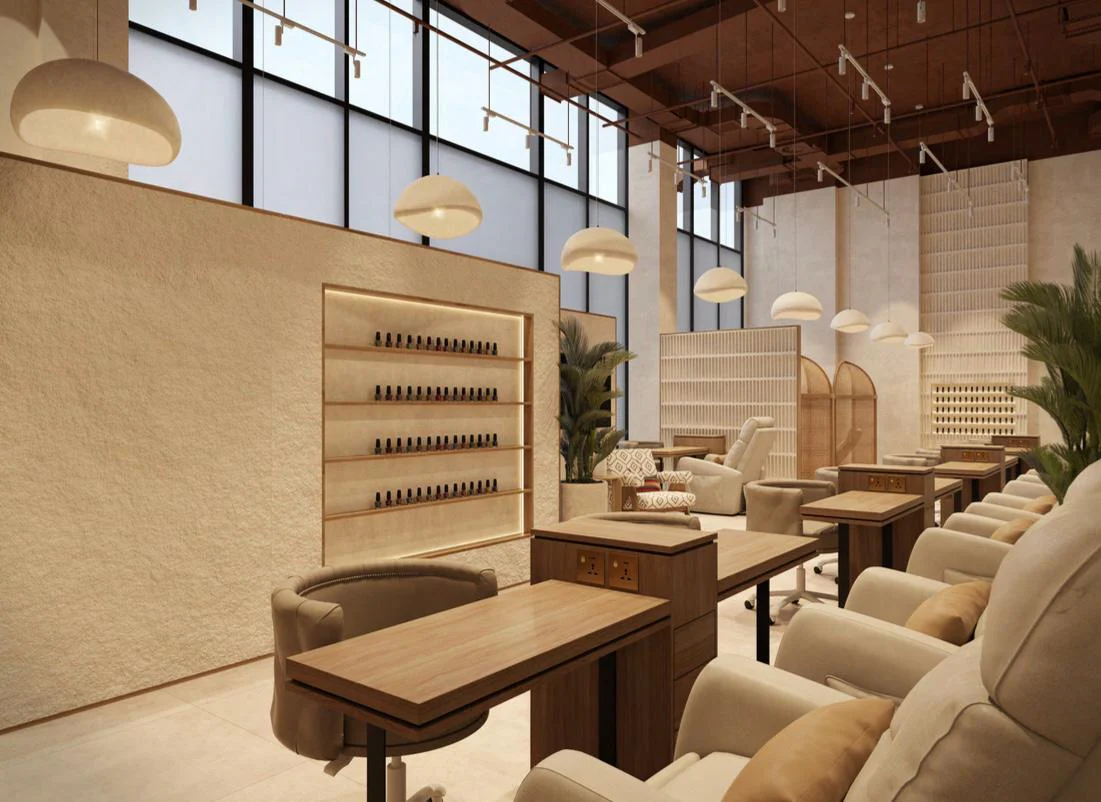
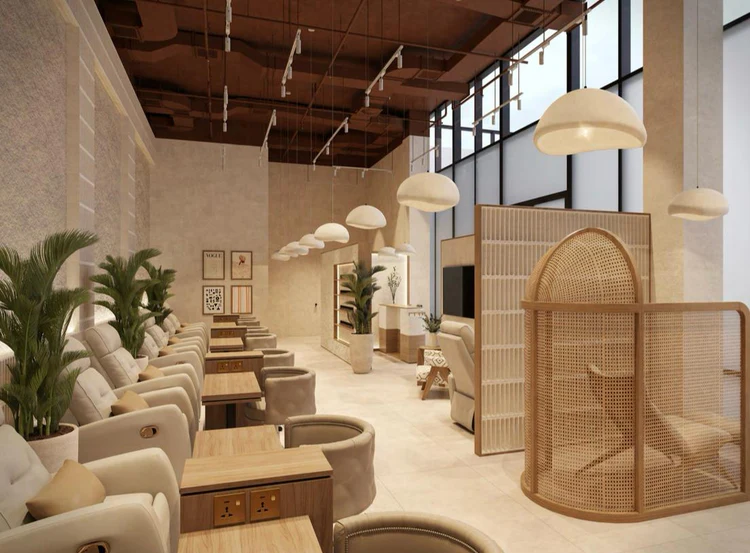
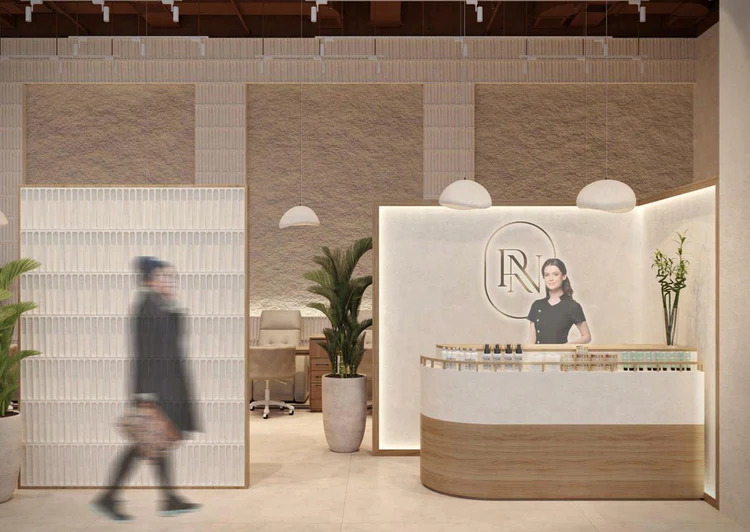
Here’s how Feng Shui principles were applied:
Location: The first step was assessing the building’s natural energy. Russian Nails selected a site deemed a “perfect Feng Shui environment”, where the surrounding Qi was naturally supportive of growth, abundance, and customer loyalty.
Color Theory: The choice of maroon as a primary color wasn’t just a bold branding move. In Feng Shui’s Five Element theory, maroon links to Fire and Earth elements, supporting passion, transformation, trust, and stability, perfect energies for a luxury beauty business.
Cashier Placement: In Feng Shui, the cashier is considered the heart of financial flow. At Russian Nails, the cashier desk was carefully positioned in an area that activates Sheng Qi (life force energy) to encourage consistent prosperity.
Design for the Senses: Through Second Nature® Wellness recommendations, the design touched all five senses:
Sound: Soft, soothing music to enhance Yang energy.
Smell: Essential oils like lavender and tea tree to signal cleanliness and relaxation.
Sight: Warm, indirect lighting to encourage peace.
Touch: Natural materials like leather and wood for a grounded feel.
Familiarity: Clear signage and flow for ease and trust.
Safety and Comfort: Even behind the scenes, attention was given to things like EMF measurements, ergonomic furniture, and noise reduction, making sure the energy flow wasn’t disrupted.
The Intention Behind the Design
What distinguishes this approach is not the specific techniques, but the quality of attention behind them. A space designed with this level of care communicates something to the people who enter it, even without words. It says: you are worth this consideration. Your experience here matters. We thought about you before you arrived.
That is what intentional design, rooted in genuine philosophy rather than trend, can offer. Not a guarantee of outcome, but an honest invitation into a different quality of presence.
